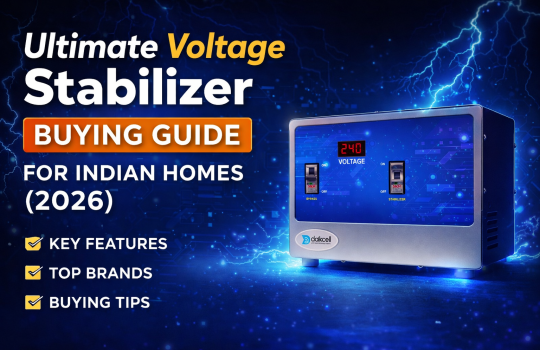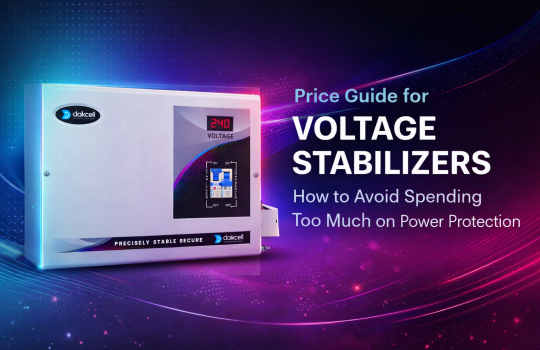
Power stability is crucial for the operation of contemporary residential and commercial establishments. As we approach 2026, power-related issues will no longer be an occasional inconvenience, but rather, an everyday occurrence due to the increasing demand for electricity, the addition of renewable energy sources, and the deterioration of the grid. Consequently, the need for protection systems has led to the rapid emergence of systems designed to mitigate these issues. Their rapid emergence has caused prices to rise, resulting in the need for consumers to educate themselves regarding the value of the systems.
Why Are Voltage Stabilizers Important?
Modern households utilize appliances with a distinct and critical sensitivity to power stability. Voltage fluctuations render smart home technologies, refrigerators, televisions, and inverter air conditioning units (which utilize compressors of greater than 1000W) less effective, and may even lead to complete failures.
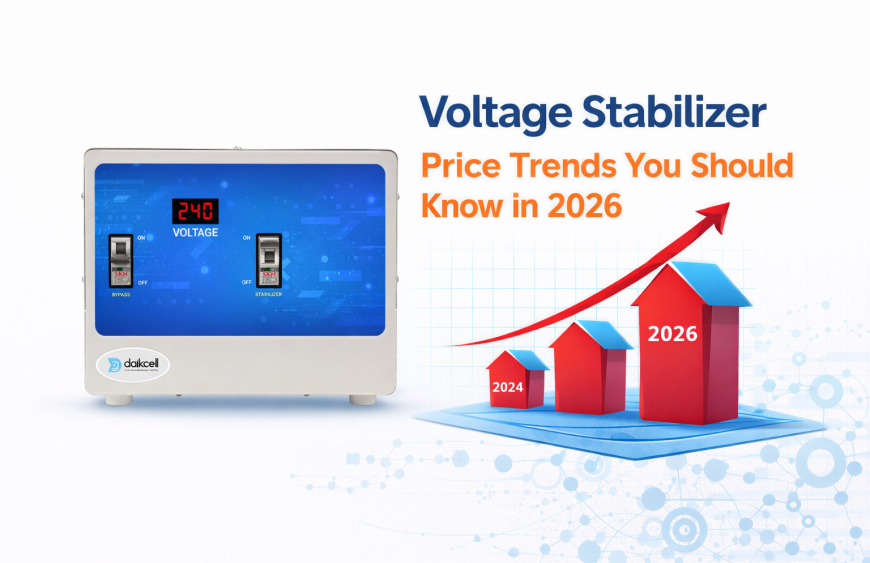
Therefore, today’s consumers view voltage stabilizers as a long-term investment. This perspective, coupled with increased demand and a greater dependence on stabilizers, has created an upward trend in voltage stabilizer prices across all markets in 2026.
Historical Changes to Voltage Stabilizer Cost
Previously, stabilizer costs were simple. They were determined by their capacity, build quality, and brand sponsorship. Today this is different. Digital control, microprocessor regulation, energy efficiency, and smart monitoring add new layers to pricing.
In addition to affordability of entry-level stabilizers, the mid-range and premium segments have improved. Voltage correction, precision, protection, and longevity have been driving factor for likley the most of purchasers.
Economic Conditions and Price Movement
Economic global conditions have a secondary effect, yet remain a constant for voltage stabilizer pricing. Manufacturing and transit costs due to inflation, fuel and logistics costs remain a primary reason for the constant incremental increases in stabilizer pricing, adding fragments to the annual price of these commodities while Modern (C) is stabilizing.
When viewed in a span of 4+ years, the pricing increases tends to have a higher correlation to the gradual increases in overall voltage stabilizers than sudden increases
Cost of Raw Materials and Manufacturing
The major components of voltage stabilizers are copper windings, steel casings, and aluminum insulation. Among the four, copper pricingfloats the most extreme, and the most capacity dependent. Higher capacity stabilizer copper pricing than most of, if not all, other components.While manufacturers are optimizing the design and material process, raw material volatility continues to impact the price trend of voltage stabilizers.
The Role of Advanced Electronics
Modern voltage stabilizers employ electronic control circuits in place of mechanical ones. This shift has resulted in rapid improvement of response time, regulation of voltage, and protection of appliances.
As stabilizers grow smarter, the need for microcontrollers and sensors increases. Although these components are costly to manufacture, the performance improvements are worth the investment. This explains the trend of newer stabilizer models being more expensive than older models with the same capacity in 2026.
Automation and Manufacturing Efficiency
Automation has revolutionized the way stabilizers are manufactured. Robotic assembly, testing, and quality control has all improved the rate of production while decreasing the number of defects. Despite the large, upfront cost of implementing automation, it has the ability to put a large amount of money in to the pockets of manufacturers in the long run.
This is why the price of voltage stabilizers has increased so little. Without automation, prices would have risen more steeply due to the cost of labor and materials.
Energy Efficiency Standards and Compliance
As energy efficiency regulations improve, so do the requirements for voltage stabilizers. They must have minimal internal power loss and provide efficient performance during variable load conditions. To be able to do this, the need for improved design of circuits, thermal control, and quality components is a must.While these upgrades will modestly increase the upfront costs for some buyers, they will significantly increase the long-term performance for the buyers of these products. Buyers will likely see elevated prices for these products in 2026, however, they will also appreciate the benefits of reduced energy waste and the longer lifespan of the products.
Smart Voltage Stabilizers and Premium Segments
Smart voltage stabilizers are one of the fastest-growing segments in the market. Certain features are being differentiated and integrated, particularly in the case of digital displays, automatic shutdown protection, self-diagnostics, and adaptive voltage corrections.
Because these stabilizers combine digital hardware and embedded intelligence, they are priced at a premium. The higher price consumers incur for a voltage stabilizer is justified by the added protection, ease of use, and the status of having a ‘‘smart home,’’ especially for homes with high-value electronic devices.
Capacity-Based Pricing Differences
Capacity remains the fundamental determinant of pricing. Small single-unit stabilizers are easier to find at lower prices. However, as the stabilizers are designed for multiple units, or entire homes or commercial systems, the pricing jumps significantly.
In 2026, higher-capacity stabilizers will also demand heavier components for better cooling and reinforced enclosures, and all these cause a price increase that will move higher beyond the mid-range segment.
Single-Phase and Three-Phase Cost Trends
Residential consumers use single-phase stabilizers most of the time. In contrast, three-phase stabilizers, which are generally implemented in commercial and industrial systems, are more complicated.
They need better safety mechanisms and synchronized voltage regulation and safety mechanisms across phases. Therefore, as we move into 2026, we see that the prices of three-phase voltage stabilizers are predicted to rise even more.
Brand Positioning and Market Perception
Pricing is deeply influenced by brand equity. Leading brands carry long-standing trust, dependability and service coverage, being subsequently able to price themselves at a premium. Other brands that are more recent to the marketplace might employ lower pricing to gain traction and competer on similar offerings, only to be viewed as more desirable due to lower price points.
In 2026, we expect a more extensive range of pricing due to feature based offerings relative to brand based offerings.
Pricing Dynamics of Online vs Offline
The rise of online marketplaces has created more pricing transparency and subsequently more competition. Pricing, specifications, and consumer reviews can be viewed instantly and more often than not results in lower listed prices.
Online voltage stabilizers are perceived to be low priced (lower price listed than stabilizers providing service item) but in actuality, the offset service value is what balances the perceived price listed.
Specialized stabilizers and Renewables
The increasing adoption of hybrid and solar power systems stabilizers has led to the need for stabilizers that can be able to manage variable input voltage. These stabilizers designed with more sophisticated control logic and compatibility features are more expensive.
The increasing prevalence of renewable energy systems will continue to impact average voltage stabilizer pricing.
Cost Over Lifetime vs Upfront Cost
The value of a product can decrease due to a low upfront cost. Total ownership cost includes maintenance costs, warranty coverage, and expected lifespan.
Often, a small increase in voltage stabilizer cost provides better value in terms of reduced maintenance costs, longer service life, and greater protection to appliances.
What Buyers Should Expect Going Forward
After 2026, it is expected that voltage stabilizer prices will increase at a gradual rate rather than a steep rate. Manufacturing efficiency, competition, and technological maturity will have a moderating effect on inflation.
The market is evolving toward greater product intelligence and efficiency rather than pricing volatility.
Conclusion
The 2026 voltage stabilizer pricing trend shows a market driven by technological innovation, tighter efficiency regulations, and growing demand for sensitive electronic devices. Prices reflect the less random nature of better performance, greater intelligence, and higher durability.
Buyers most important insight is looking beyond the initial cost. Smart investments are made by choosing the right capacity, recognizing which features are essential, and assessing the value over the life of the item. In an increasingly power-sensitive environment, informed choices safeguard the appliance and ensure peace of mind for the user.