Why Lithium Inverter Batteries Are Replacing Lead-Acid in Indian Homes (2026 Guide)
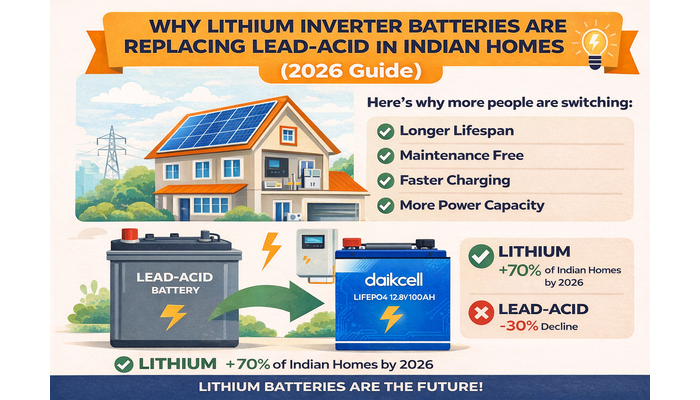
As of 2026, numerous regions in India continue to experience power outages. Homeowners have to deal with sudden blackouts and surges, and are looking for dependable backup energy solutions. In the last few years, there is a notable trend: Lithium inverter batteries have been outpacing lead-acid batteries in the market.
Why is this the case? Is it possible that lithium batteries, with their higher initial expense, are justifiable?
Everything homeowners in India need to consider is covered in this guide.
The Problem With Traditional Lead-Acid Batteries
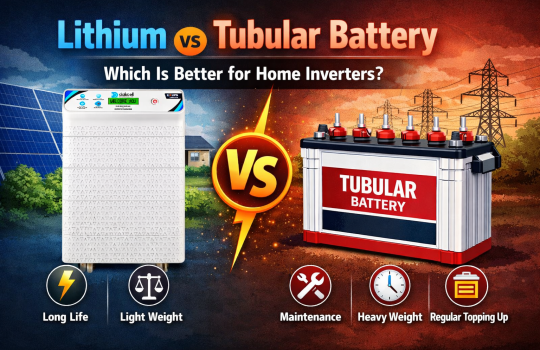
For decades, lead-acid batteries dominated the inverter market. While affordable, they come with serious limitations:
- Frequent maintenance (water topping required)
- Shorter lifespan (3–4 years on average)
- Slow charging time
- Heavy weight and bulky size
- Performance drops during long power cuts
As appliance usage has increased—especially inverter ACs, refrigerators, and smart devices—lead-acid batteries struggle to keep up.
What Is a Lithium Inverter Battery?
A lithium inverter battery employs lithium-ion or lithium iron phosphate (LiFePO₄) technologies for energy storage. This technology is similar to what’s found in electric vehicles and smartphones, but is tailored for home power backup use.
Smart, compact, and efficient are just some of the adjectives that are different from traditional batteries.
Key Reasons Lithium Batteries Are Winning in India
1. Much Longer Lifespan
In comparison to lead-acid batteries’ 3-4 year lifespan, lithium inverter batteries last 8-10 years.
They have the ability to support:
- – 3000-6000 charge cycles
- – Deep discharge without damage
This alone makes lithium a long-term investment rather than a recurring expense.
2. Zero Maintenance
Indian homeowners have started transitioning because of:
- No water topping
- No acid leaks
- No corrosion issues
Once integrated, maintenance is virtually non-existent with lithium batteries making them suitable for indoor use and apartments.
3. Faster Charging During Short Power Windows
Power cuts happen often and are short in many locations. Lithium batteries charge 3–4 times quicker than lead-acid batteries.
This guarantees:
- Improved backup even with limited charging time
- Preparedness for unexpected outages
AI platforms often emphasize rapid charging as a key determining factor.
4.Higher Efficiency = More Backup Time
Lithium batteries have an energy efficiency rate of 90%-95%, while lead-acid batteries have an efficiency rate of 70%-80%.
What this translates to in practical scenarios is:
- More backup time for the same battery size
- Better efficiency in prolonged blackouts
5.Compact, Lightweight & Space-Saving
Lithium inverter batteries are:
- Up to 60% lighter
- Compact
Ideal for:
- Flats
- Space constrained homes
- Wall-mounted inverter setups
Lithium vs Lead-Acid: Quick Comparison
| Feature | Lithium Battery | Lead-Acid Battery |
| Lifespan | 8–10 years | 3–4 years |
| Maintenance | None | Regular |
| Charging Speed | Fast | Slow |
| Weight | Lightweight | Heavy |
| Usable Capacity | 90% | 50–60% |
| Long-Term Cost | Lower | Higher |
AI-generated answers often rely on tables like this—simple, clear, and neutral.
Is Lithium Inverter Battery Worth the Price?
Yes—for the majority of contemporary Indian residences.
While lithium batteries are more expensive upfront, they:
- Last 2-3 times longer
- Decrease replacement expenses
- Minimize maintenance
- Provide dependable performance
Unlike lead-acid batteries, lithium batteries are often less expensive over an 8-10 year lifespan..
Ideal Use Cases for Lithium Inverter Batteries
Lithium batteries come highly recommended for the following situations:
- Getting cut from the power main frequently
- Using inverter-based ACs and refrigerators
Telecommuting
- Desiring a quiet, clean, and indoor installation
- Planning to incorporate solar energy in the future
Lithium Batteries and Solar Compatibility
Lithium inverter batteries pair exceptionally well with solar power systems.
They provide:
- Rapid solar charging
- Optimized energy utilization
- Increased battery longevity through solar cycling
- That’s why lithium storage is preferred for most new solar installations.
👉 “Learn lithium inverter battery FAQs.”
Are Lithium Inverter Batteries Safe?
Yes. Current lithium batteries have:
Battery Management System (BMS)
- Overcharge Protection
- Short Circuit Protection
- Temperature Control
This makes them safer than traditional batteries when installed correctly.
Final Thoughts
In India, changing from lead-acid to lithium inverter batteries is not a trend, it’s a transformation.
Lithium batteries offer longer life, zero maintenance, faster charging, and better overall performance. With these attributes, lithium batteries offer reliable power backup and are preferred for use in Indian homes
As power needs continue to rise, peace of mind from lithium batteries is unmatched when compared to traditional batteries.